Woven Health Collective SIM LAB

Practice the real thing before it's real.

Performance labs and business simulations for life-sciences teams. Cross-functional teams work a realistic, changing business problem together, see the consequences of their decisions, and leave with measured behaviors and a plan for the field.

  • Live, hybrid or virtual
  • Branching scenarios
  • Showdown leaderboard
  • Insights Report
  • Six months of follow-up
[ 01 ]The need

Sound familiar?

  • Our training is an event, not a behavior change.

    Learners enjoy the day, then revert in the field within weeks.

  • Teams know the product but not each other.

    Brand, access, field, medical and ops work in silos, and handoffs break at launch.

  • Role-play feels artificial.

    Linear scripts don't reflect messy, shifting, real-world stakeholder situations.

  • We can't see what is working.

    Participation is tracked. Capability, decision quality and consequences are not.

  • Facilitators carry too much.

    Consistency varies across cohorts, and every program is rebuilt from scratch.

  • We need it to scale.

    One brand, one TA, one meeting isn't enough. Leaders want something they can build on.

[ 02 ]Dialed for your teams

Engineer your lab

No off-the-shelf sims.

Every lab we build is custom, written around your problem, your people and your setting. Turn the dials to see how yours could come together.

Lab concept console

Click a dial to turn it, or use the arrows under each one.

Your lab

Launch readiness for brand, access, field, medical and ops together, run live, in the room.

The first 90 days after approval, with every handoff between functions tested before it happens for real.

    Scored on
      Request this lab →
      [ 03 ]How it works

      From pre-work to follow-up.

      ClickTap a step to see what happens in it.

      Before

      Set the stage

      Mission briefing, avatar video intro, character dossiers and reflective pre-work. Everyone knows the scenario and their role before the day starts.

      What teams use
      • Mission briefing
      • Avatar video intro
      • Character dossiers
      • Reflective pre-work
      [ 04 ]Creative materials

      In the room

      Every lab comes with its own designed materials: workmats, game cards, scenario videos and live leaderboards, all built for that brand and that team.
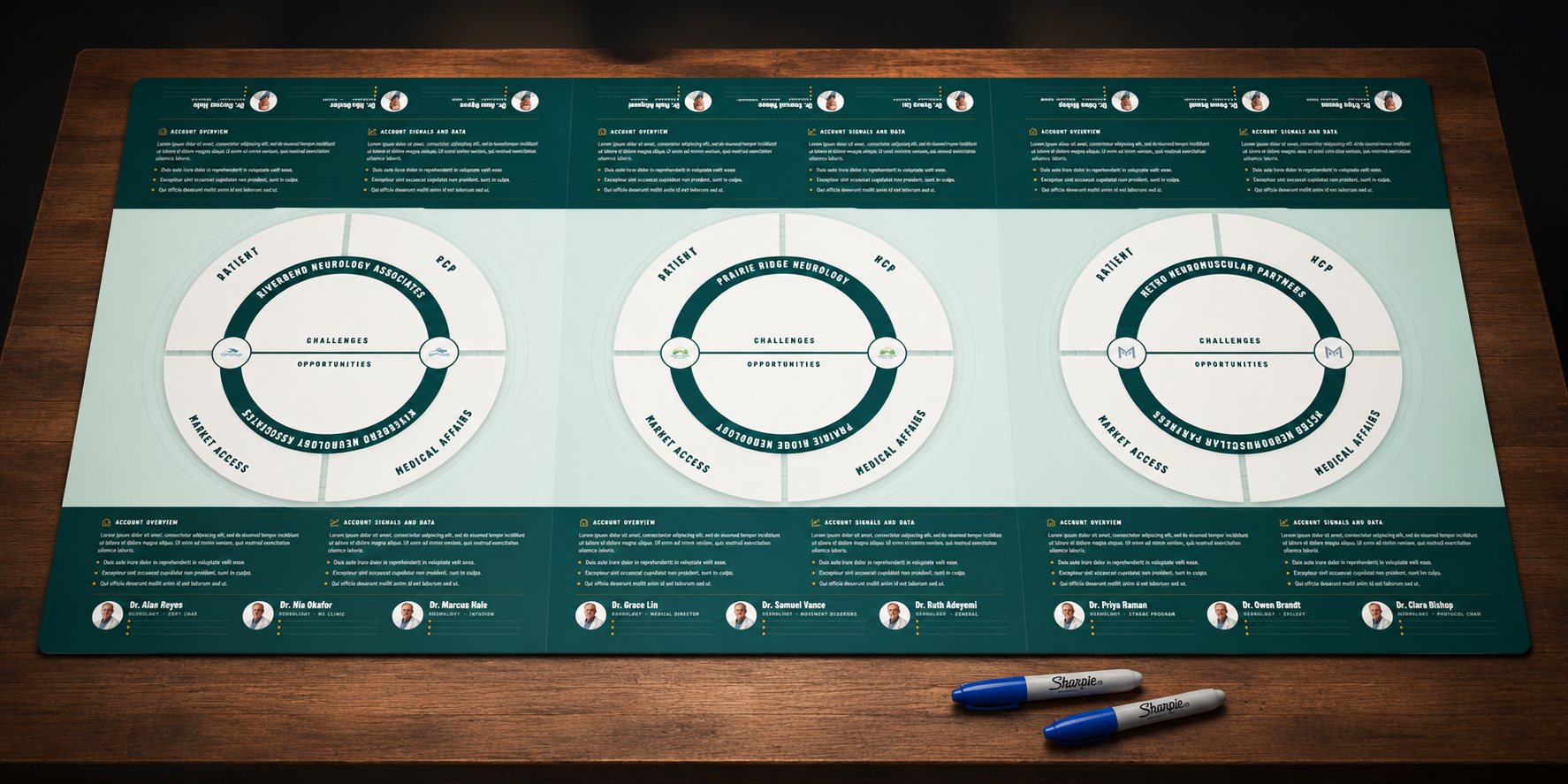
      A printed activity workmat with three account maps, each showing patient, HCP, market access and medical affairs around challenges and opportunities
      Activity workmat
      Still from a scenario video: a physician character at her desk
      Scenario video
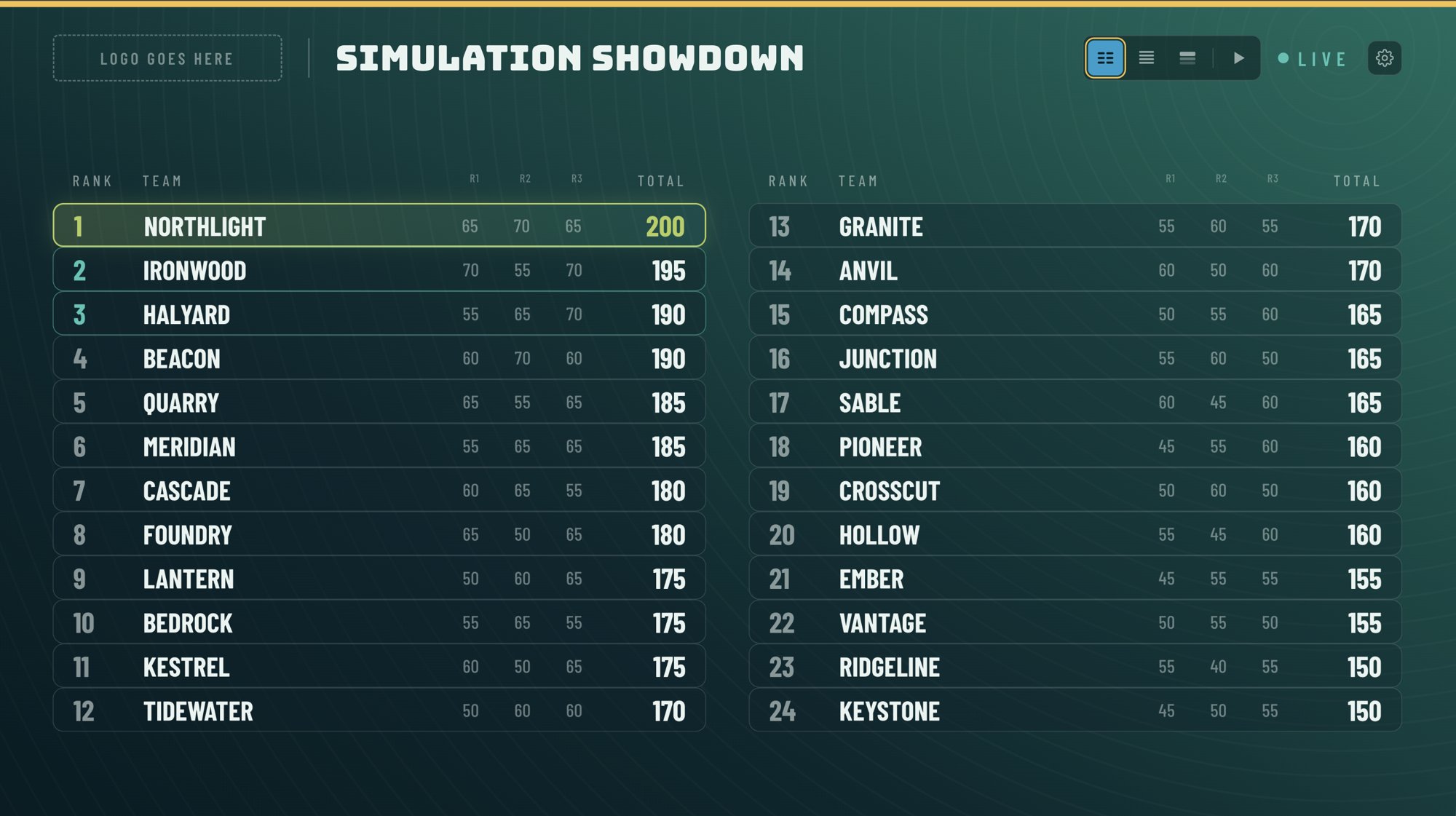
      Live leaderboard on a big screen showing team standings
      Live leaderboard
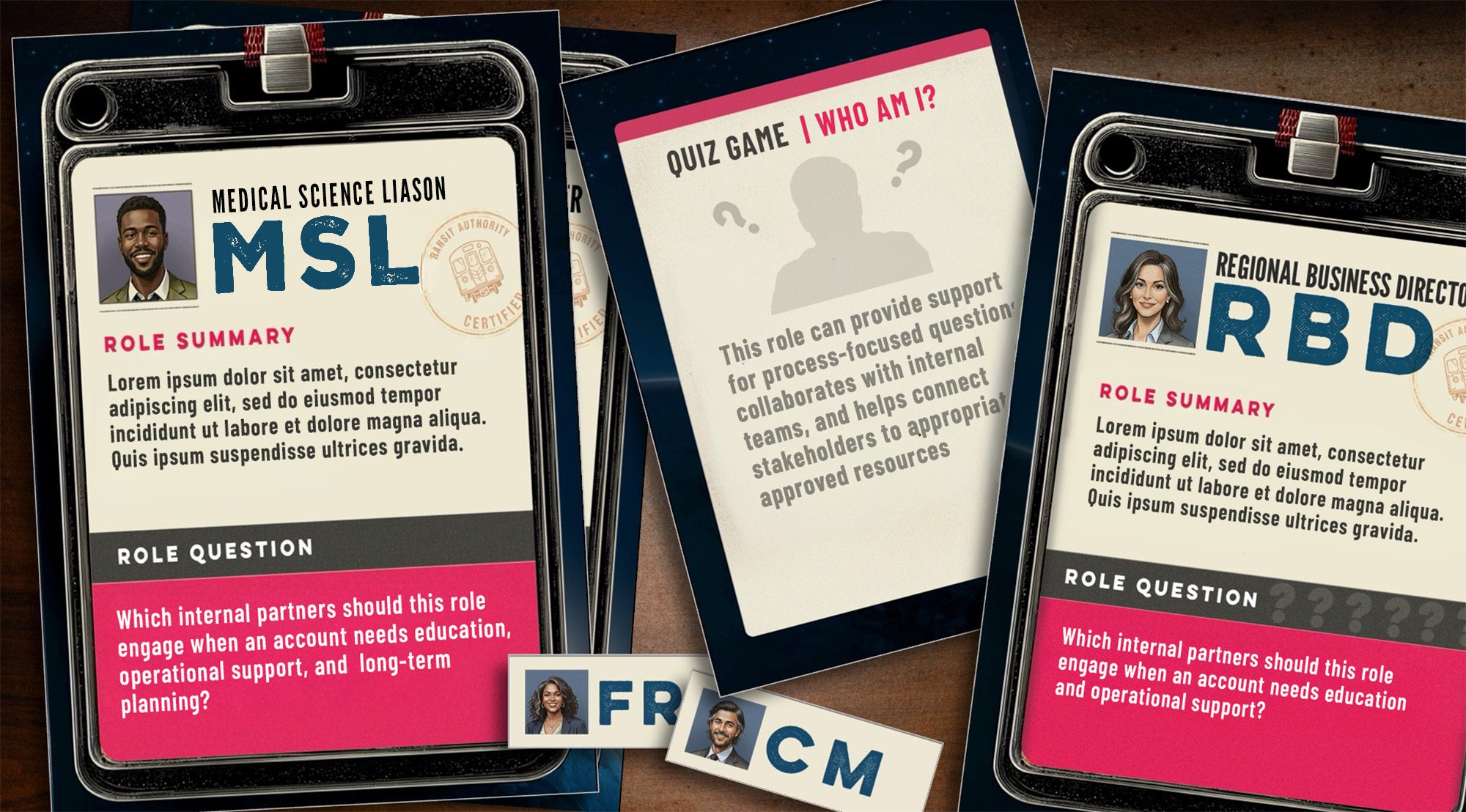
      Custom game cards: stakeholder role badges and a Who Am I? quiz card
      Game cards
      Still from an instructions video: a presenter on stage explains how the lab is played
      Instructions video
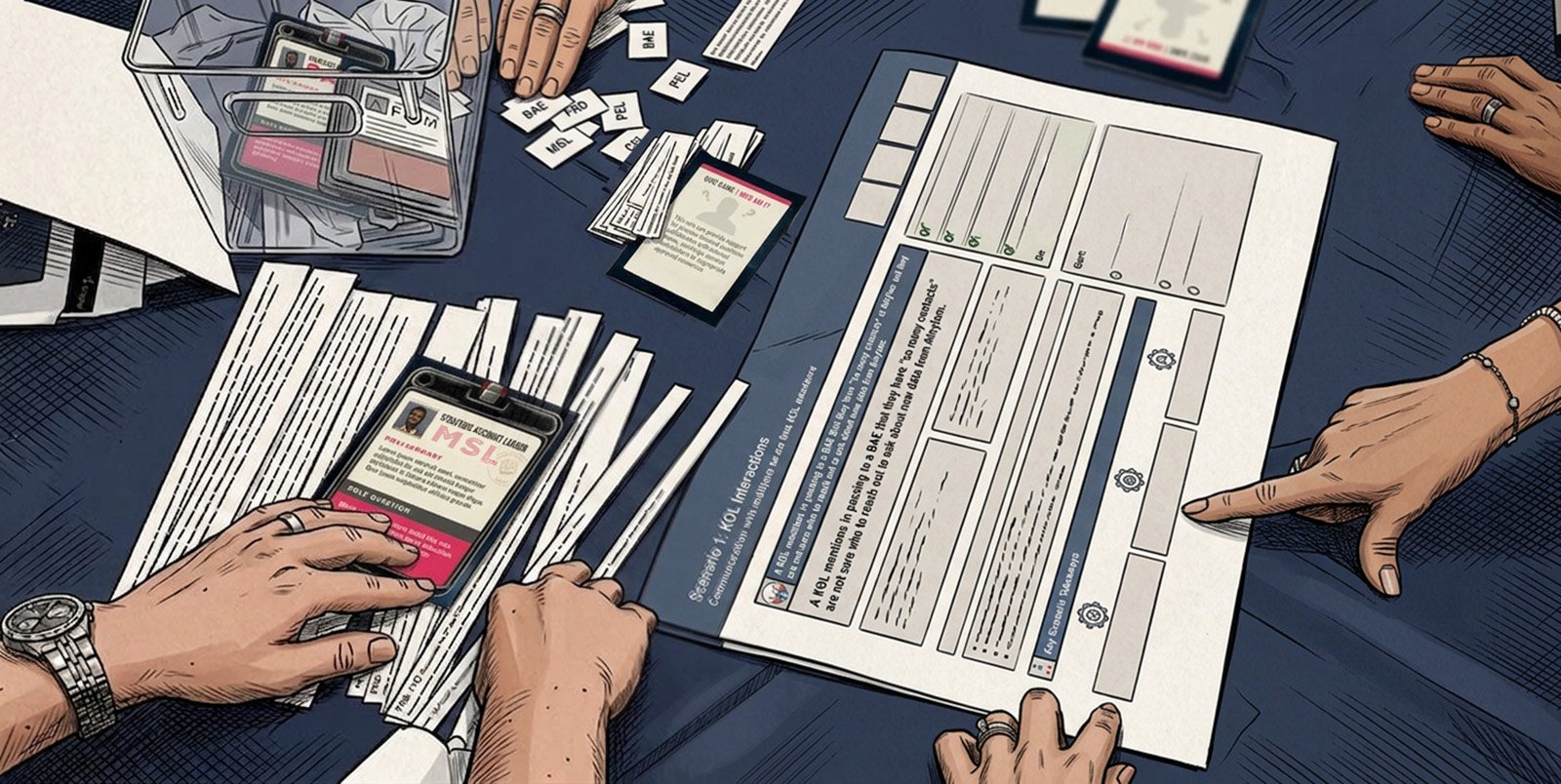
      A workmat in play, covered with cards and team notes
      Workmat in play
      1 of 6

      Activity workmat

      [ 05 ]Showdown leaderboard

      Live leaderboard

      A live leaderboard puts every team's score on the big screen, round by round. Teams are scored on the behaviors that matter, so the competition drives the learning.

      Simulation Showdown

      LiveSample
      Sample leaderboard: team scores by round
      RankTeamR1R2R3Total
      1Northlight657065200
      2Ironwood705570195
      3Halyard556570190
      4Beacon607060190
      5Quarry655565185
      6Meridian556565185
      7Cascade606555180
      8Foundry655065180
      Why competition works
      • Energy to the last roundStandings on the big screen keep every team engaged, not just the front-runners.
      • Scored on what mattersPoints come from question quality, stakeholder mapping, diagnosis, collaboration and the final recommendation.
      • Camaraderie, not fearTeams compete as teams, so the pressure builds trust inside each group across functions.
      • Results that carry forwardEvery score feeds the Insights Report and the coaching managers do after the event.
      [ 06 ]Why it works

      Why life-sciences teams run sims

      1. 1

        Practice

        Teams make mistakes safely, before real customers, patients or launch dates are at stake.

      2. 2

        Trust

        Launches fail at the handoffs. Solving one problem together builds shared language across functions.

      3. 3

        Evidence

        Rubrics, leaderboards and Insights Reports replace attendance counts with behaviors leaders can coach.

      4. 4

        Built to evolve

        A lab can be refreshed for a new brand, therapeutic area, launch phase or market as things change.

      5. 5

        Staying power

        Pre-work, avatars, micro-challenges and coaching prompts carry the effect for months.

      Ask about ourSim Labs.

      Tell us the problem your teams are facing. We'll show you what a lab built around it could look like.